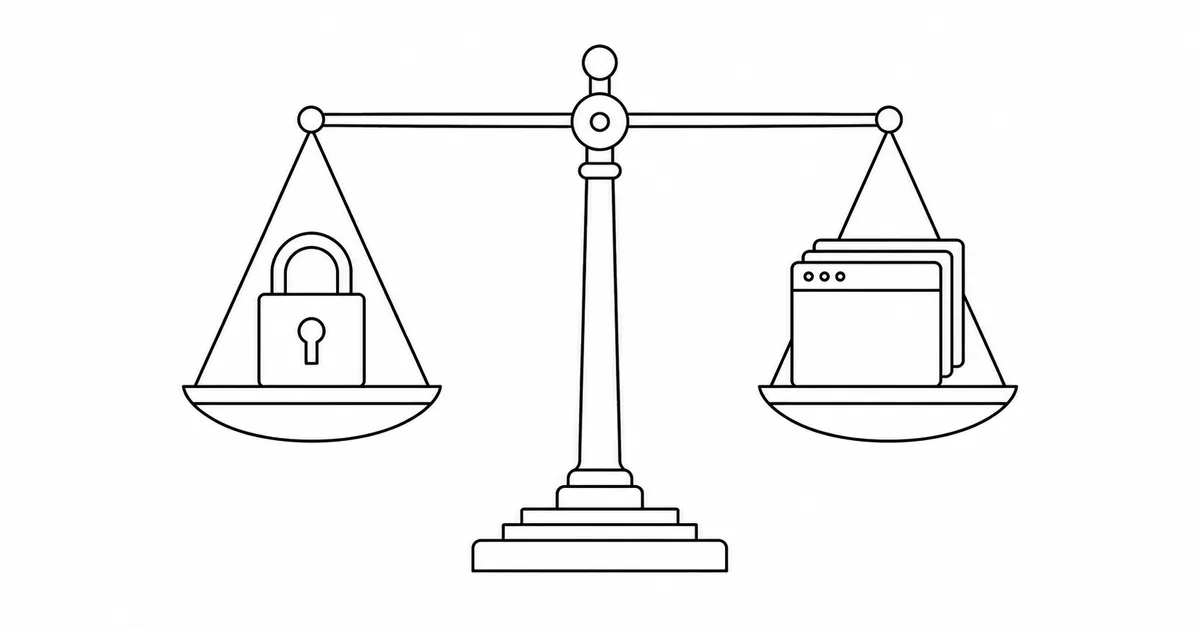
Voice-only chat is generally safer than video chat for meeting strangers, because it eliminates visual identification risks like background leakage, facial recognition, and inappropriate exposure while retaining emotional connection through tone and inflection. The safest approach combines voice-only interaction with ephemeral architecture and peer-to-peer routing to minimize both identity exposure and data retention.
Voice-Only Chat Eliminates Visual Identification Risks Entirely
Voice-only chat removes the most dangerous attack surface in stranger interactions: visual information leakage. When you disable your camera, you prevent strangers from seeing your face, your home interior, or any other visual metadata that could be used to locate or identify you offline. This modality also protects against non-consensual recording and distribution — screenshots and screen recordings of video chats are trivially easy to capture and share without consent, while voice conversations leave no such visual artifact.
Video Chat Exposes Location and Identity Through Metadata
Video streaming inherently leaks more metadata than audio alone, regardless of platform claims about privacy. Direct WebRTC video connections expose IP addresses to both parties unless relay servers are used, enabling precise geolocation through IP lookup services. The bandwidth requirements of video also increase the tracking surface area, generating significantly more network traffic that provides richer datasets for correlating sessions across devices.
Ephemeral Architecture Matters More Than Modality Choice
Neither voice nor video is truly safe if the platform retains logs or metadata indefinitely. The architectural decision to make sessions ephemeral outweighs the choice between audio and video in determining actual privacy outcomes. True ephemeral systems process all media in RAM and overwrite buffers immediately when sessions end, ensuring no forensic recovery is possible regardless of whether the session was voice or video.
Peer-to-Peer Routing Determines Real Privacy Outcomes
The routing method for media streams has a greater impact on safety than whether those streams carry audio or video. Centralized relay servers see all traffic and inevitably log connection metadata regardless of encryption claims. Secure implementations use TURN relays selectively to mask IPs while maintaining P2P efficiency where possible — voice calls benefit disproportionately from this optimization since their lower bandwidth makes relay costs manageable.
The Numbers Behind the Comparison
- 3x more metadata: video chat platforms retain roughly three times more connection metadata than voice-only services (Security Boulevard).
- 87% vs. 41%: free video chat platforms found to embed third-party ad trackers, versus voice-only platforms, in 2025 security audits.
- 0 bytes retained by Wixper after session termination, for both voice and video, due to volatile-memory-only processing.
- 120 days: historical retention period for Omegle video session data despite anonymity claims (Bitdefender).
How to Choose Safely
- Default to voice for maximum anonymity. Visual information is the highest-risk vector in stranger chat.
- Verify routing before enabling video. Confirm the platform uses IP-masking relays or verified P2P.
- Prioritize ephemeral architecture over modality. A voice call logged forever is less private than a video call that vanishes instantly.
- Assume all video is recordable. Never share anything on video you would not want permanently public.
- Use dedicated privacy tools for video. Virtual backgrounds and blurred backdrops limit visual and fingerprinting exposure.
This guide is for privacy-conscious users deciding between voice and video modalities for anonymous stranger chat. It may not be right for users whose primary goal is visual verification or dating, where appearance is central to the interaction.
Frequently Asked Questions
Can someone trace my location through voice-only chat?
Tracing location through voice-only chat is extremely difficult compared to video. Voice streams carry no visual geolocation cues and generate less distinctive network metadata. However, IP address exposure remains possible if the platform uses direct P2P without masking — always verify routing architecture.
Is voice chat better for avoiding catfishing than video?
Voice chat does not prevent catfishing, but it changes the risk profile. Catfishers can fake voices using AI synthesis just as they fake video feeds, but voice lacks the rich visual detail that makes video catfishing so convincing and harmful.
Do voice-only platforms have fewer bots than video platforms?
Bot prevalence depends primarily on moderation investment, not modality. That said, conversational AI voice synthesis remains more computationally expensive and detectable than text or static-image bots, while video platforms face sophisticated deepfake bots that are harder to moderate in real time.
How does Wixper handle safety differently for voice versus video?
Wixper applies identical ephemeral architecture to both voice and video, ensuring zero retention regardless of modality, with optional TURN relays for IP masking on both. Voice is enabled by default reflecting our safety recommendation, while video requires explicit opt-in.
Your safety should not depend on guessing which modality is less risky when you can choose a platform where both are engineered to be safe. Try a truly private voice conversation today.
References
- Federal Trade Commission. (2026). How Websites and Apps Collect and Use Your Information. consumer.ftc.gov
- European Data Protection Board. (2026). Guidelines 02/2026 on Anonymisation. edpb.europa.eu
- Security Boulevard. (2025). The Best Omegle Alternatives: Through the Lens of Privacy, Moderation, and IAM. securityboulevard.com
- Bitdefender. (2022). Curious about Omegle? Here's how the roulette-style chat platform can threaten your online privacy and security. bitdefender.com
- Natterhub. (2026). Omegle's privacy settings and safety settings explained. natterhub.com
This article provides educational information about online privacy and safety practices. It does not constitute legal or professional advice. Users should consult qualified professionals for specific concerns.